Recover the Right Way
We all know that staying active and challenging ourselves can be enjoyable and rewarding. What often gets overlooked, however, is the equally important role of recovery. After a strength training session, your muscles experience microscopic tears that need time to be repaired. It is during this recovery process that muscles rebuild, strengthen, and grow. In other words, progress is not made through training alone. Effective recovery is just as essential as the workout itself. Training and recovery are two sides of the same coin. You simply can’t maximise muscle growth and performance without both.
While recovery may not seem as exciting as an intense training session, it is a critical part of achieving your fitness goals. Start treating recovery as an important and rewarding part of your fitness journey instead of an afterthought.
Here’s how you can include recovery to complement your training to make the most of your hard work –
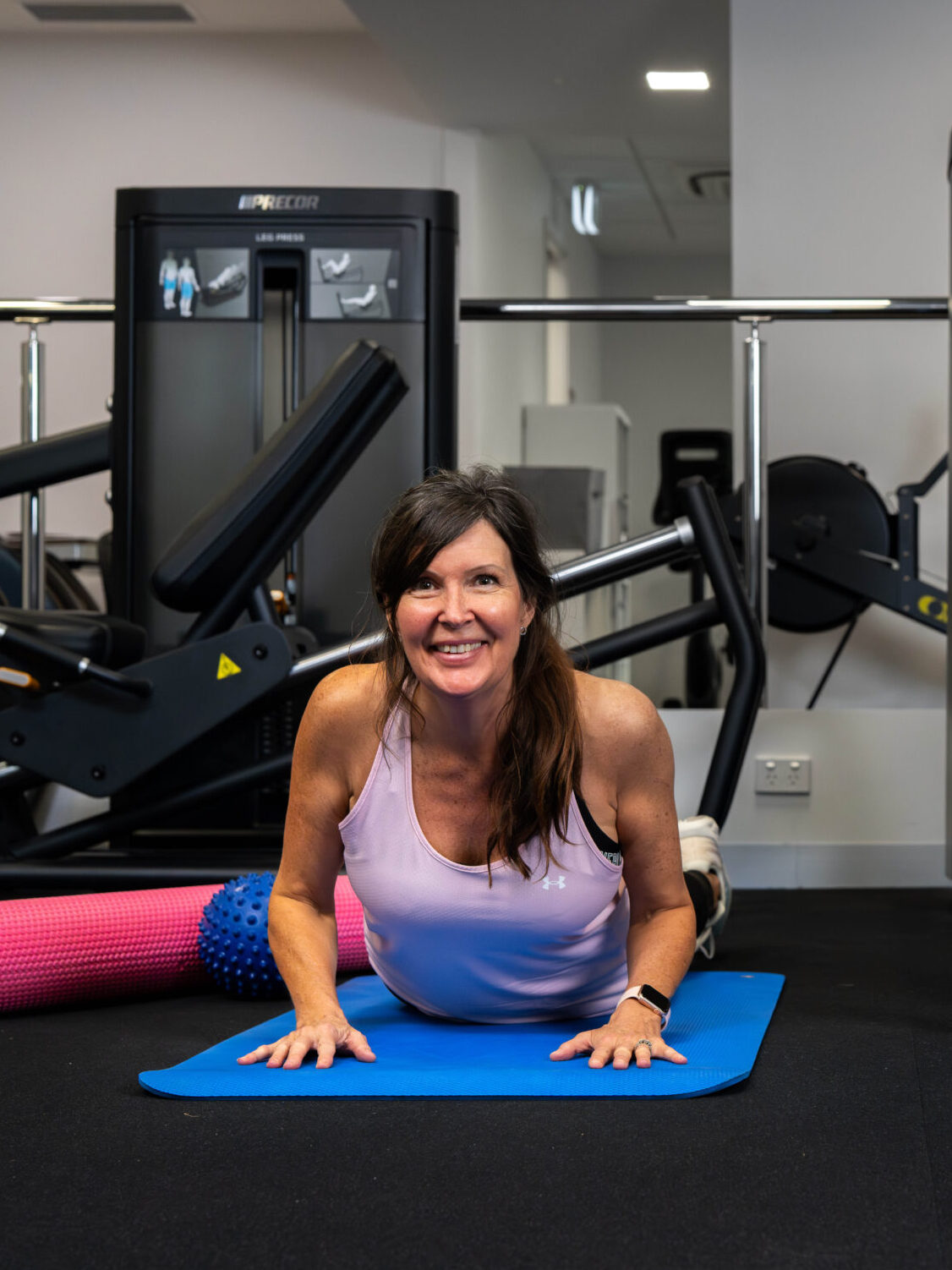
1. Cool Down
An often-overlooked way to prevent injury and prepare your muscles to recover is to engage in a cool down stretching session after training. Directly stopping after a workout session is an extreme change for your muscles. Easing out with light static stretches allows you to comfortably transition into recovery mode, acting as a steppingstone to what can be done next before your next workout.
2. Active Recovery
While resting up is important, there is also some benefit to be found in low-intensity form of exercise to help boost recovery. It involves gentle movements such as walking, cycling, yoga, stretching, or light swimming, which increase blood flow to the muscles and aid in clearing lactic acid build-up. Active recovery can reduce muscle soreness, improve flexibility, and promote faster recovery while keeping the body moving.
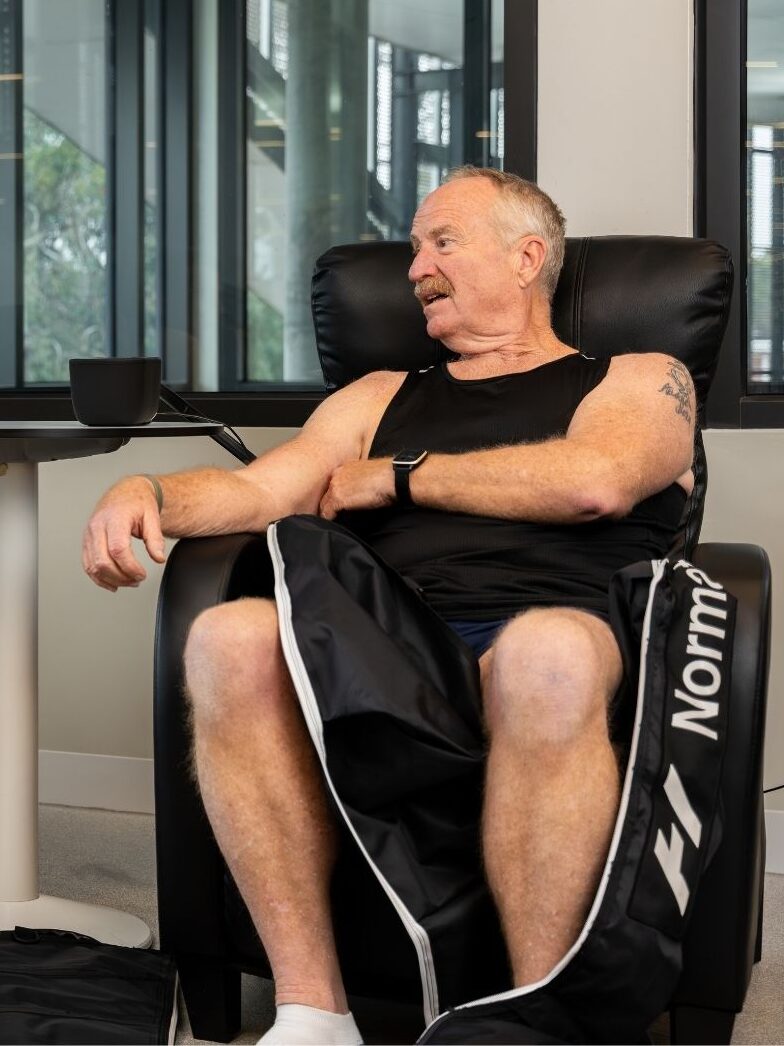
3. Compression therapy in our Recovery Zone
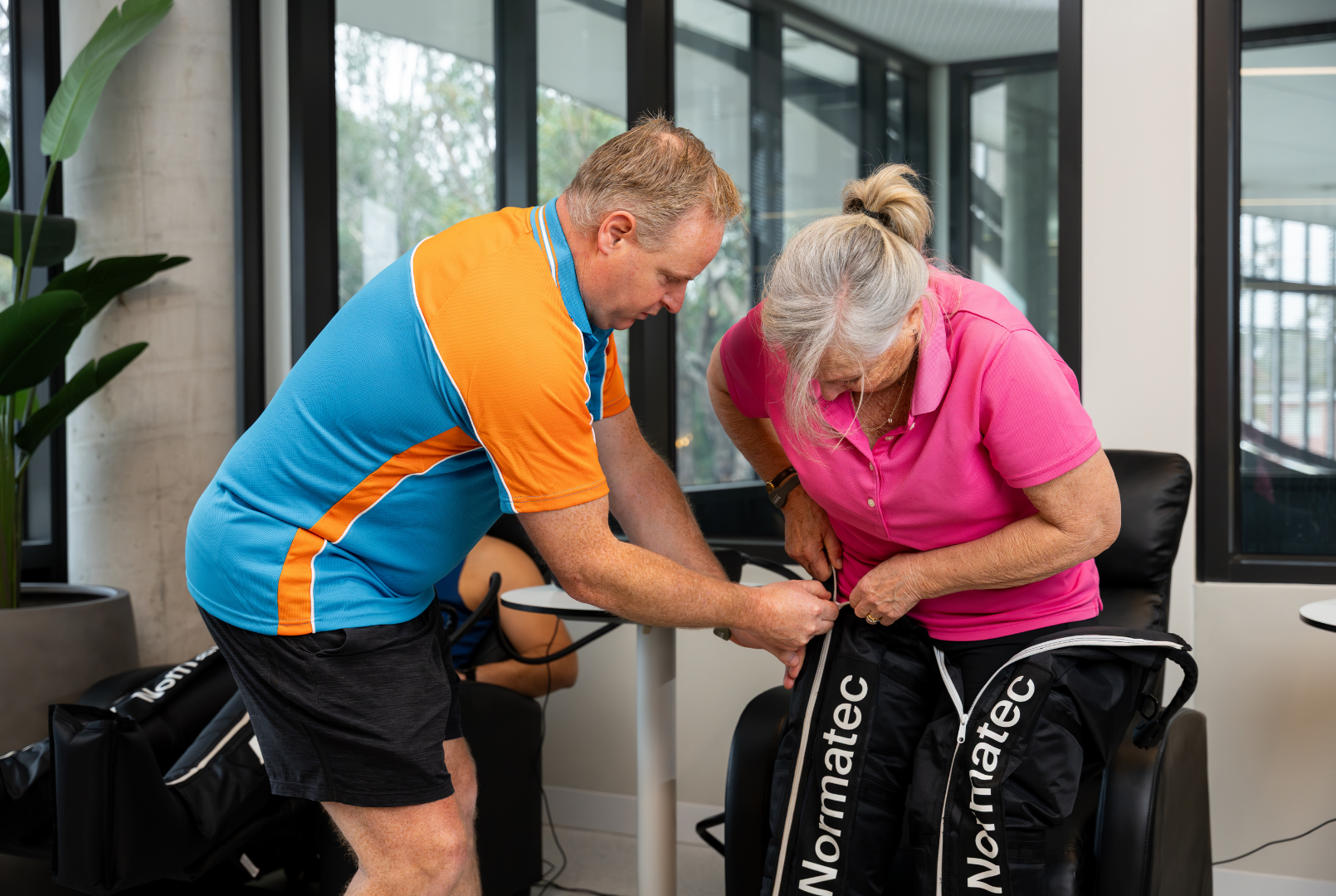
After a leg day or an intense run, you can head to our new Recovery Zone located in our Health Club and benefit from compression therapy with Normatec 3 Compression Boots. Its advanced dynamic air compression technology helps to increase circulation, revive muscles, and reduce swelling.
4. Sleep
Sleep is a vital part of fitness recovery because it allows the body to repair and rebuild muscles after exercise. During deep sleep, the body releases growth hormones that support muscle recovery, tissue repair, and protein synthesis. Adequate sleep also helps reduce fatigue, restore energy levels, improve athletic performance, and maintain mental focus and motivation. Without enough quality sleep, recovery slows down, increasing the risk of injury, poor performance, and reduced effectiveness of training programs.

5. Massage tools in our Recovery Zone
Engage in percussive therapy to soothe sore muscles through rapidly striking your deep muscle tissue. Using percussion massage guns help mitigate delayed-onset muscle soreness (DOMS), making the recovery process pleasant and easy to get through. Alternatively, one can also use vibrating foam rollers for its contoured shape to speed up recovery, improve mobility, and reduce muscle soreness.
6. Mobility
Here’s an underrated method to recover efficiently, and it only takes 5-10 minutes of your time. The bonus part? It also works on injury prevention! With mobility drills, reinforce proper movement patterns, improve joint functions, and increase blood flow to repair muscles quickly. Do it now, and your joints will thank you later.
7. Rest days
Above all, effective recovery starts with listening to your body. Giving yourself permission to rest when needed is essential for long-term progress. Overextending yourself not only increases the risk of injury but can also lead to physical and mental burnout. Make rest days a priority in your training schedule to maximise performance and achieve sustainable results.